From Good Intentions to Good Design: Why Meaningful Patient Engagement Requires More Than a Seat at the Table
Patient-centricity has been part of healthcare conversations for years. Yet a fundamental question remains: Are we designing patient support programs around what matters most to patients—or around how our programs operate?
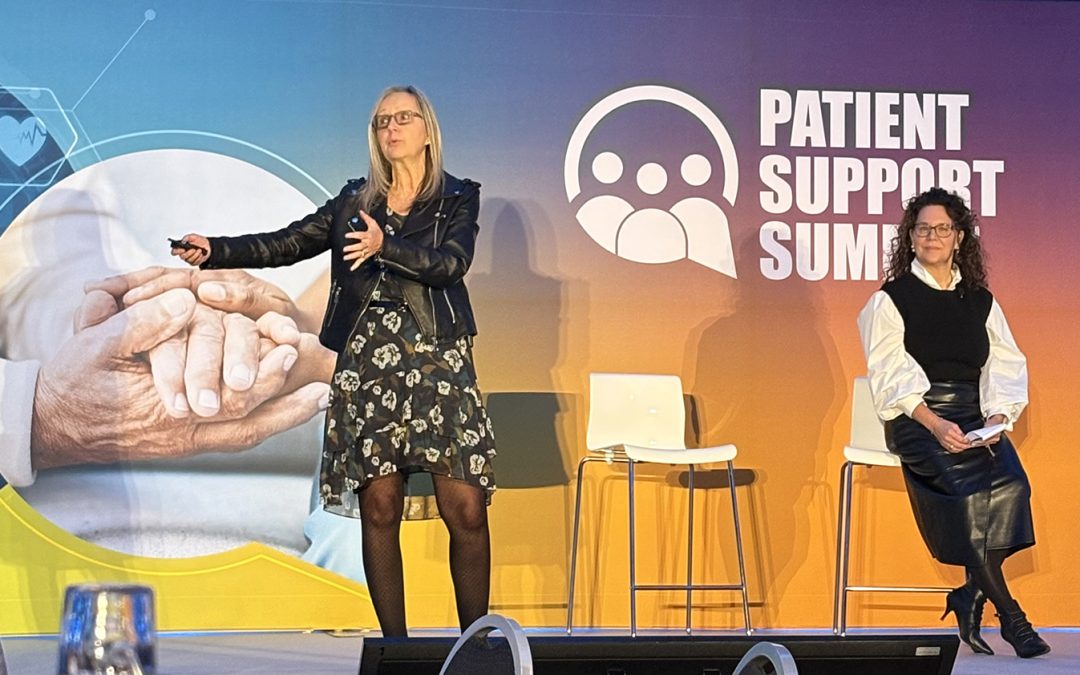
At the recent Patient Support Summit*, Patient Voice Partners’ Anne Marie Hayes and Christine LaFave challenged organizations to move beyond good intentions and rethink what meaningful patient-led design requires.
The Patient Journey Is Not the PSP Journey
Patient support programs (PSPs) help people navigate treatment initiation, reimbursement, education and ongoing therapy. But a PSP represents only one part of a patient’s experience. Life with a condition also involves diagnosis, treatment decisions, relationships with healthcare professionals (HCPs) and changing needs over time.
The moments that matter most to patients do not always align with program milestones. If a PSP is designed primarily around operational processes, what important needs might be overlooked?
Different Perspectives Reveal Different Priorities
Patients and HCPs can experience the same journey differently. A clinical or operational priority may not be the barrier that feels most significant to a patient. Neither perspective tells the whole story.
The opportunity is not simply to collect both viewpoints, but to understand where they align, where they differ and how those insights should shape decisions.
Participation Is Not the Same as Influence
Inviting patients to an advisory board or workshop is a start—not proof of meaningful engagement. Effective participation requires thoughtful selection, preparation, support and skilled facilitation, especially when patients and HCPs are brought together.
It also requires a clear path from what participants share to what an organization actually changes. Otherwise, engagement risks becoming an exercise in collecting feedback rather than creating influence—and can erode trust when people never learn how their contributions were used.
From Patient Insights to Better Design
Many organizations already have patient research, established PSPs and a commitment to engagement. The harder challenge is turning those insights into strategy, design and implementation.
At Patient Voice Partners (PVP), our Patient Intelligence Strategy™ approach helps pharmaceutical organizations connect patient and HCP perspectives with practical decisions. We bring the strategic direction and engagement expertise needed to move from listening to meaningful action.
Is Your Program Designed Around the Patient Journey – or the Program Journey?
Whether you are developing a new PSP, reassessing an existing one or strengthening patient and HCP engagement, the distinction can change what you prioritize.
Let’s explore what a more patient-informed approach could mean for your next project. Contact Patient Voice Partners at www.patientvoicepartners.com.
*Since 2017, the Patient Support Summit has been Canada’s trusted forum for the Patient Support Program community including pharmaceutical manufacturers, program providers, pharmacies. insurance companies and digital solutions firms